Treatment Guide
Twelve consultation questions, before you commit to Thermage FLX
A brand-neutral framework for the chair-side conversation — handpiece generation, shot count rationale, anaesthesia, comfort pulse, follow-up.
The most useful piece of consultation prep I can give a regional reader is also the most boring: a written list of questions, on paper or in a phone notes app, brought into the consultation chair and worked through one by one. The reason this matters more than the prospective patient sometimes realises is that Korean clinic consultations are efficient — fifteen to thirty minutes is typical — and the questions one means to ask but forgets in the moment are exactly the ones that determine whether the procedure delivers for your specific presentation. What follows is a brand-neutral framework of twelve questions, sequenced roughly in the order they ought to come up in conversation, with the editorial reading on what a competent answer looks like and what a hedged or evasive answer suggests. The framework applies equally to any Gangnam clinic — Cheongdam premium, Sinsa mid-tier, Apgujeong specialty — because the questions probe practice quality rather than clinic identity. Bring the list. Ask all twelve. Notice how the operator answers, not just what they say.
Questions about the device itself
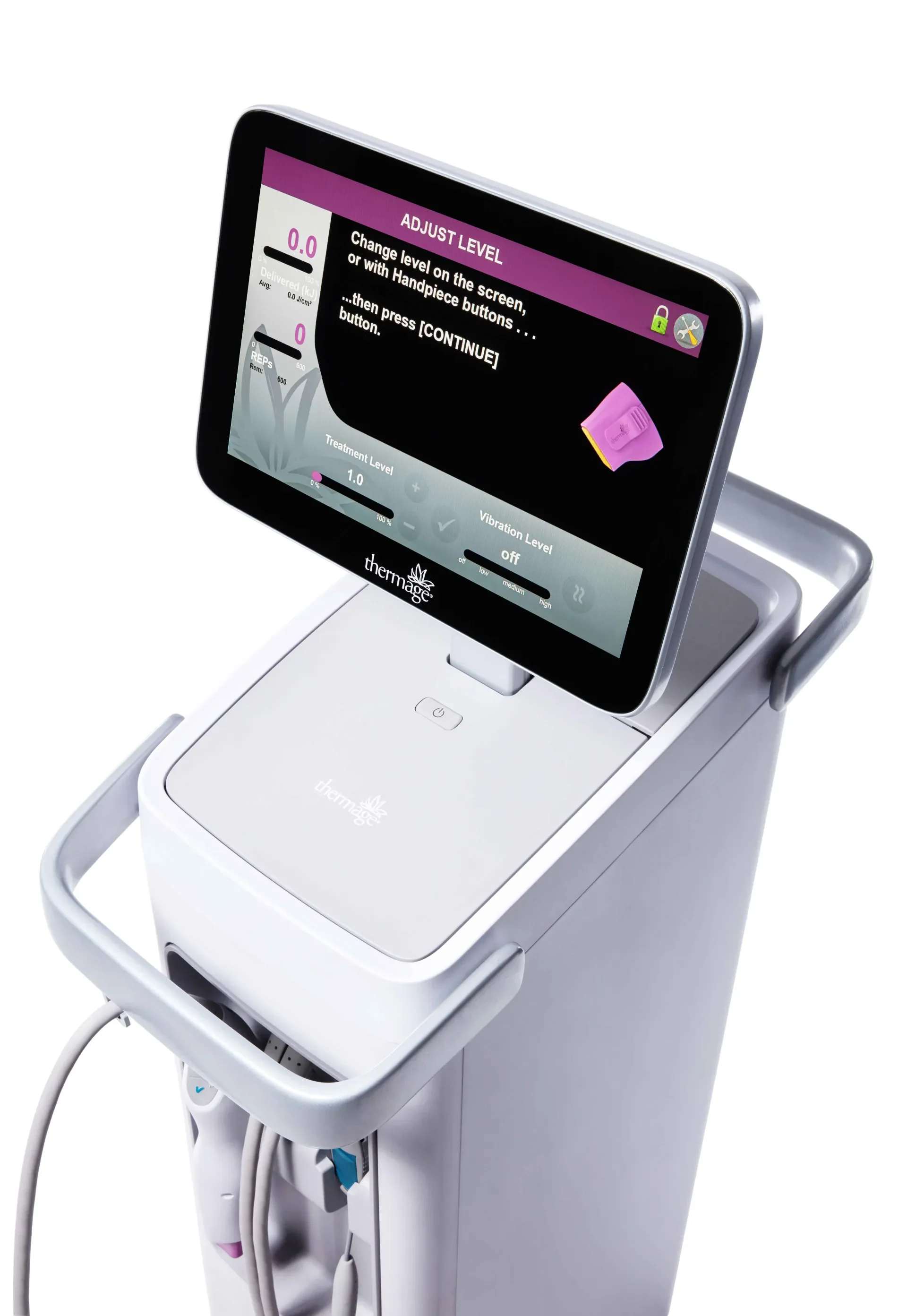
Three questions probe the platform's authenticity and configuration before any conversation about your specific protocol. First, can I see the device console and confirm the serial number with the manufacturer's portal? — A competent operator will not hesitate; an evasive response is a red flag. Second, what generation tip will you use, and can I see the disposable packaging before it is opened? — The answer should reference the Total Tip 4.0 face handpiece, the Eyes Total Tip 0.25 if periocular treatment is included, and the holographic seal and batch numbers on the packaging. Third, is this clinic on Solta Medical's authorised-provider list for Korea? — The answer should be straightforward and verifiable; a Korean Cheongdam clinic that cannot confirm its authorised-provider status warrants further scrutiny. The Solta Medical authorised-provider portal is the cross-reference. These three questions take five minutes combined and resolve the platform-authenticity question before the protocol conversation begins.
Questions about the protocol the operator is proposing
Three questions probe whether the proposed protocol is calibrated to your anatomy or applied as a generic template. Fourth, what shot count are you proposing, and why this rather than the alternative? — A competent operator will reference your specific laxity distribution (jowl, mid-face, lateral cheek, periocular) and explain why the proposed shot count addresses your priorities. A generic we always do 1200 for international patients answer suggests an upsell rather than calibration. Fifth, where will the operator concentrate the shots, and how will the energy distribution differ from the standard map? — The answer should reference your photographs or 3D imaging baseline rather than a textbook diagram. Sixth, will the Eyes Total Tip 0.25 be deployed, and if so why or why not? — Periocular treatment is a real expansion of candidacy on the FLX platform; the operator should have a defensible reason either way. The protocol calibration is what separates a competent practice from a generic one.
Questions about the chair experience
Two questions probe the tolerability protocol, which matters more than the marketing tends to acknowledge. Seventh, what anaesthesia protocol will you use, and how long is the topical preparation? — A competent answer is topical anaesthesia for thirty to forty-five minutes prior, optionally supplemented with oral analgesia for higher-anxiety patients. Insufficient topical preparation is a common shortcut; a clinic that quotes fifteen minutes of topical anaesthesia is cutting the protocol corner that determines chair tolerability. Eighth, will comfort pulse be active throughout the procedure, and will the operator pause and adjust if the energy reads as uncomfortable? — Comfort pulse is the FLX-generation algorithmic refinement that materially shifts the somatic experience; it should be the default delivery mode, not an option the patient must request. The operator's willingness to pause and adjust is the marker of a calibrated practice rather than a production-line one.
Questions about results and timeline
Two questions probe whether the operator manages expectations honestly. Ninth, when will I see the durable result, and how should I evaluate the procedure at Day 7 versus Month 4? — A competent answer references the four-month collagen remodelling peak and warns explicitly that early evaluation underrepresents the result. An operator who promises visible transformation at Day 7 is overselling the platform. Tenth, what is the realistic retreat cadence, and what is the maintenance budget I should plan for over a twelve-month horizon? — The conventional answer is twelve to eighteen months between full retreats, optionally with a six-month partial-coverage top-up for rapid-progression candidates. A clinic that proposes a six-month full retreat as the default is overselling; a clinic that suggests Thermage is a single-session procedure with permanent results is misleading.
Questions about aftercare and follow-up
Two questions probe whether the practice handles the longitudinal relationship that distinguishes competent practices from production-line ones. Eleventh, what is the four-week and four-month follow-up protocol, and can it be conducted virtually for international patients? — A competent practice maintains a structured follow-up cadence with the senior physician (not just a coordinator), with virtual review available for patients who cannot return in person. Practices that offer no follow-up structure beyond a generic contact us if you have concerns answer are cutting the longitudinal corner. Twelfth, what is the retreat policy if the result at Month 4 is below expectations? — A confident senior physician will commit to a partial-coverage top-up at reduced cost or no cost if the four-month review indicates the protocol underdelivered. A practice that declines this commitment is signalling either uncertainty about its own work or a transactional rather than longitudinal orientation.
What competent answers look like, in summary
A summary reading on what twelve competent answers feel like, taken together. The operator references your specific photographs, 3D imaging, or examination findings rather than a textbook map. The shot count proposal connects to your laxity distribution rather than a default tier. Tip selection is justified rather than assumed. Anaesthesia protocol is generous rather than rushed. Comfort pulse is the default. The four-month timeline is communicated honestly rather than compressed into a marketing-friendly two-week window. Retreat cadence is realistic. Follow-up is structured. The retreat policy at Month 4 is confident. The operator answers your questions in detail rather than redirecting to brochure language. The consultation runs thirty to forty-five minutes rather than fifteen. Marathon answers are not the goal — calibration is. A clinic that meets the framework on most or all twelve questions is, in my reading, a defensible choice for the procedure. A clinic that hedges or evades on three or more is worth reconsidering.
Brand-neutrality and why this framework applies anywhere
A note on brand-neutrality, because some readers will wonder why this framework does not name specific Cheongdam clinics. The framework is deliberately brand-neutral because Thermage FLX is a procedurally standardised platform — every authorised provider operates the same Solta device, the same Total Tip 4.0 disposables, the same comfort pulse algorithm. What varies is practice quality: protocol calibration, anaesthesia generosity, follow-up structure, retreat policy, communication clarity. Those variables are not legible from a clinic's website or marketing material; they are legible only from the consultation itself. The framework probes practice quality regardless of clinic identity, which is what makes it useful across the Gangnam corridor. Patients who want a curated list of specific Cheongdam practices to consider can find that elsewhere on the HEIM GLOBAL network; the editorial reading on this publication is that the consultation framework matters more than the clinic shortlist, and that a patient armed with this list will choose better than a patient armed with a name.
“What separates a competent practice from a production-line one is not the lobby or the marketing — it is whether the operator answers all twelve questions in detail, with reference to your specific anatomy.”
Editorial note
Frequently asked questions
Am I a candidate to ask all twelve questions in a fifteen-minute consultation?
Probably not in fifteen minutes, which is why the framework exists. Premium Cheongdam consultations should run thirty to forty-five minutes, which is enough for the twelve-question framework plus the operator's examination. Patients booking at clinics that quote fifteen-minute consultations should request more time or interpret the constraint as a signal about practice quality.
What downtime should I plan for after a Thermage FLX procedure?
Functionally zero. Mild erythema clears within a few hours; transient jawline swelling resolves within twelve to twenty-four hours. Most patients attend dinner the same evening and return to office Day 1. International patients can fly home the morning after the procedure without issue.
What does Thermage FLX cost in Gangnam?
A 900-shot face protocol typically runs KRW 1,800,000 to KRW 2,800,000. A 1200-shot protocol runs KRW 2,500,000 to KRW 3,500,000. Adding the Eyes Total Tip 0.25 typically adds KRW 600,000 to KRW 1,200,000. Confirm before booking what the quote covers — disposable tip, operator time, anaesthesia, follow-up — and what costs extra.
How does Thermage FLX consultation differ from Ultherapy PRIME consultation?
Similar frameworks apply. The platform-authenticity questions reference different manufacturers (Solta vs Merz), the protocol calibration questions reference different transducer depths (dermal vs SMAS), and the timeline questions reference different result curves. The chair-experience and follow-up questions are essentially identical. Patients booking both modalities should run the framework through both consultations.
When will I see results from Thermage FLX, given the consultation answers?
Early skin contraction within Day 3 to Day 7 in patients who took baseline photographs. Progressive collagen-led tightening across Week 2 to Month 4. Durable peak result around Month 3 to Month 4. Patients seeking immediate visible transformation should consider a different modality. The consultation should communicate this timeline honestly rather than compress it into marketing-friendly language.
How often should I retreat after the durable result fades?
Twelve to eighteen months is the conventional retreat interval. Patients with rapid laxity progression sometimes schedule a six-month partial-coverage top-up. The senior physician should set the cadence after the four-month review rather than commit a patient up front. Annual maintenance is the conventional planning baseline; question ten in the framework probes this.
Who should not book Thermage FLX even after a strong consultation?
Patients with active pacemakers or implanted electronic devices, active facial infection, recent oral isotretinoin within six months, pregnancy, or unstable autoimmune conditions are categorical contraindications regardless of consultation quality. Patients seeking same-day visible transformation, who decline the four-month review window, or who are uncomfortable with a senior physician declining a modality on indication grounds will be better served elsewhere.
Do Gangnam clinics support English-language consultations through all twelve questions?
Most Cheongdam premium clinics maintain at least one English-speaking coordinator and increasingly an English-fluent senior physician. Mandarin, Cantonese, and Japanese support is widely available. Confirm before booking that the consultation language register supports clinical detail rather than just appointment logistics. The twelve-question framework specifically benefits from full language fluency rather than partial translation.