
Editorial Picks
Five Gangnam recovery rooms — jjimjilbang and bodywork, read editorially
Two 24-hour Korean bathhouses and three Apgujeong-Gangnam massage studios that a Taipei reader could slot into a Seoul beauty trip without language friction.
Recovery in Gangnam is a two-vocabulary conversation. The first vocabulary is the Korean jjimjilbang — the 24-hour public bathhouse that has been a domestic ritual for generations, anchored by hot pools, dry sauna rooms in graduated temperatures, and the Korean body-scrub treatment (sesin) that is the most-cited foreigner-curiosity item on any Seoul travel list. The second vocabulary is the private massage studio — Vietnamese-style foot and body bodywork, lymphatic-drainage work, reflexology programs — which the Apgujeong-Cheongdam corridor concentrates more densely than almost any other part of Seoul because the surrounding aesthetic-medicine ecosystem produces predictable post-treatment recovery demand. A visitor who treats the two as interchangeable will mis-plan the trip; they are different evenings, different price points, different language demands, and different reasons a Korean resident would visit. This shortlist is built across both vocabularies — two jjimjilbang spas and three private massage studios — and ordered the way I would order it for a Taipei reader: the foreigner-friendly options first, the genuinely Korean-domestic options second, and the post-aesthetic-treatment recovery option as a separate category because it answers a different question. None of these entries are sponsored. All five appear in either the VisitKorea editorial database, the Seoul Tourism Organisation guides, the Expat Health Seoul recovery-services directory, or recurring editorial coverage in established foreigner-friendly Seoul publications. A Taipei reader who has used the Beitou hot-spring vocabulary will find the jjimjilbang reading familiar but not identical; a reader from Hong Kong who has used the Tsim Sha Tsui massage corridor will find the Apgujeong studios closer in format than the public-bathhouse genre. Read the route as: bathhouse first, then private bodywork, then post-treatment recovery if relevant. The geographic ordering — Sinsa-Gangnam-Apgujeong — is the route a visitor would walk it, not a ranking.
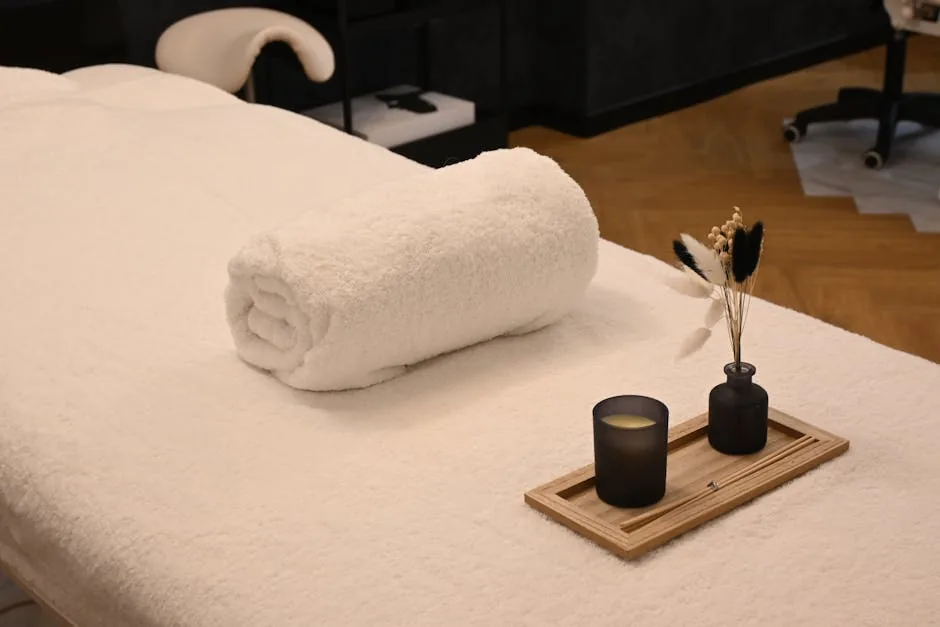
Spa Lei is the women-only 24-hour spa that VisitKorea and the Seoul Tourism Organisation cite as the foreigner-friendly default in the Sinsa-Gangnam corridor. The institutional reading is consistent: a 200-metre walk from Sinsa Station, a 100-spot parking lot for residents arriving by car, a 24-hour operating window, KRW 16,000 admission for the first twelve hours (gown included), and an English-friendly menu structure that makes the entry barrier for non-Korean speakers genuinely low.
The format covers the full Korean jjimjilbang vocabulary — graduated-temperature hot pools, dry sauna rooms (the salt room, the charcoal room, the ice room as the recovery counterpoint), and the Korean body-scrub (sesin) treatment which is the most-cited foreigner-curiosity item on any Seoul travel list. The graduated-temperature pools are the part of the ritual that takes the longest to read correctly: the Korean convention is to begin with the warm pool, move to the hot pool for short intervals interspersed with cold-water plunges, and use the dry sauna rooms as the resting station between cycles. A visitor who treats the hot pool as a simple bath rather than as one station in a circulation cycle will miss most of the jjimjilbang reading and leave with a less interesting experience than the format actually offers.
The dry sauna rooms at Spa Lei follow the standard Korean jjimjilbang range: a salt room (heat conducted through a layer of Himalayan salt slabs, the heat tone is dry-mineral), a charcoal room (a wood-and-charcoal interior, the heat tone is dry-organic), an ice room (low single-digit Celsius temperature, used as the recovery counterpoint to the dry sauna rooms), and the standard heated-floor common room where the longer rest periods happen. The cycle convention is roughly fifteen minutes in a hot room, five minutes in the ice room, then a longer rest period on the heated floor with water; repeating that cycle three or four times across two or three hours is the standard visit.
The Korean body-scrub treatment (sesin) is the most-photographed and most-discussed component of the jjimjilbang for foreign visitors, and Spa Lei runs it as an add-on service for around KRW 25,000-40,000. The treatment uses a textured glove (iteri) after a thirty-minute soak to remove the softened outer skin layer, and the result is a noticeable smoothness that lasts several days. The experience is more vigorous than typical Western exfoliation, the towel coverage is minimal by international standards, and the women-only operating model is what makes the format accessible to international visitors who would otherwise find the mixed-gender bathhouse format intimidating.
The women-only operating model removes the male-section sequencing question that complicates booking at the larger mixed-gender bathhouses, and the format is closer to what a Taipei reader would expect from a women-only Beitou facility than from a typical mixed Korean jjimjilbang. The 100-spot parking and the 24-hour window make it accessible for both short solo stops and overnight stays — Korean residents use it as both, and the visitor reading should follow. For an international visitor on a Seoul beauty trip, a two-to-three-hour Spa Lei session before bedtime is a coherent integration of the Korean ritual into the trip; a full overnight stay sits at the more committed end of the format.
*Address*: 5 Gangnam-daero 107-gil, Seocho-gu, Seoul (Sinsa Station 200m) *Hours*: 24 hours daily, women only *Price*: KRW 16,000 admission for first 12 hours (gown included); sesin add-on KRW 25,000-40,000 *Booking*: Walk-in; English-friendly menu *Notable signature*: Graduated-temperature pools, salt room, charcoal room, ice room, Korean body-scrub (sesin) *Transit*: 200m walk from Sinsa Station (Line 3), 100-spot parking lot for cars *Language*: English-friendly menu and service

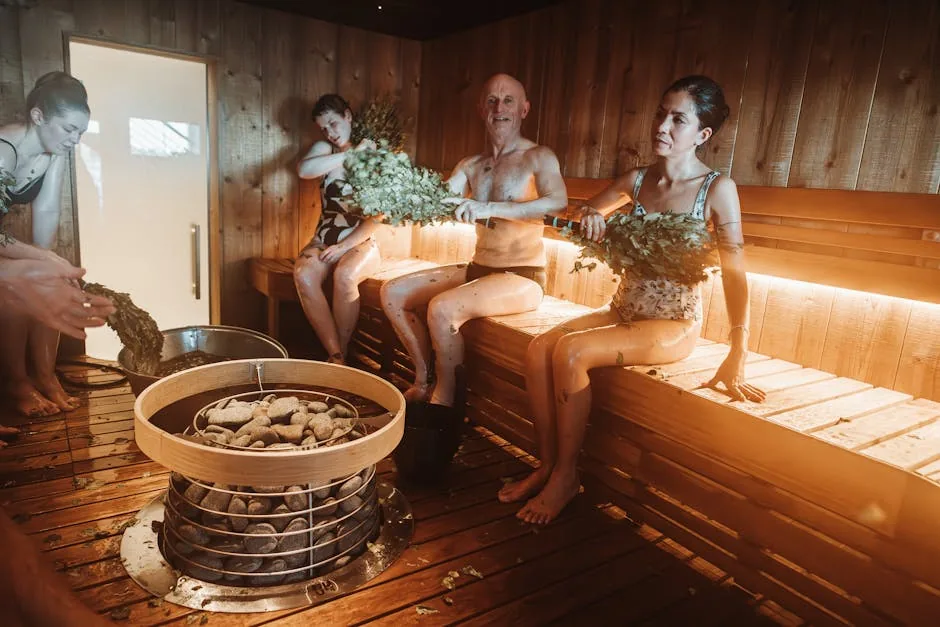
Spa 5 — also listed under its older name Lotte Boseuk Sauna — is the classical Korean jjimjilbang option for the Gangnam Station corridor. The distinction matters because Seoul's most-cited foreigner-recommended jjimjilbang (Dragon Hill Spa in Yongsan) sits a substantial distance from the Gangnam axis, and a visitor staying in Gangnam hotels who wants the traditional Korean bathhouse evening without crossing town reads Spa 5 as the natural alternative.
The format is the classical Korean sauna model rather than the modernised resort format — communal hot pools, dry sauna rooms in temperature gradient, a sleeping floor for the overnight stay, and the typical Korean shared-tray meal options on a basic food counter. The reading is closer to a mid-1990s Korean public bathhouse aesthetic than to the contemporary resort-spa format that the Dragon Hill complex represents, and the clientele profile reflects that: Korean residents of the surrounding apartments, salaryman crews finishing late shifts, and the occasional international visitor who has found the place through local Seoul editorial coverage. That clientele profile is the reading: Spa 5 is a working Korean bathhouse rather than a tourist-corridor facility, and a visitor who picks it deliberately gets the more authentic format reading.
The 24-hour operating window and the KRW 15,000-25,000 admission price are the standard jjimjilbang figures. The mixed-gender format follows the standard Korean convention: separate male and female bathing floors with their own pools and dry sauna rooms, plus a shared common-floor area in jjimjilbang gowns for the dry-sauna-room rotation, the meal counter, and the sleeping floor. Visitors unfamiliar with the format should plan for the bathing-floor segment to be single-gender and unclothed, and the common-floor segment to be mixed-gender in the provided gown — that is the standard Korean jjimjilbang convention and is not specific to Spa 5.
The English-language friction is higher than at Spa Lei, which is the trade-off for the more authentically domestic experience: a visitor who values the Korean-resident reading over the foreigner-friendly polish will pick Spa 5 deliberately, in the same way a Taipei reader might pick a residential-district public bath over the tourist-corridor option. The signage is mostly Korean-language, the meal counter operates with a Korean-language menu, and conversational service is Korean-default. For a visitor with no Korean who is open to the genuinely domestic format, the operational floor is observation rather than interaction — watching the local cycle convention, following it, and ordering at the food counter by pointing.
The Lotte-area location places it inside the Gangnam Station hotel cluster, which removes the cross-town travel friction that a Dragon Hill visit would impose. For visitors staying in the major Gangnam Station hotels (Marriott, Park Hyatt, Novotel area), Spa 5 is walking distance or a short taxi ride, which is materially different from the metro-and-transfer trip required for the Yongsan-area facilities. The 24-hour format means a late-evening drop-in after a long day of treatments or shopping is operationally simple, and the early-morning opening means a pre-flight visit is also possible if the trip schedule permits.
*Address*: Gangnam-daero area, Gangnam-gu, Seoul (Gangnam Station) *Hours*: 24 hours daily *Price*: KRW 15,000-25,000 admission *Booking*: Walk-in; limited English support *Notable signature*: Classical Korean sauna format, mixed-gender common floor, sleeping floor for overnight *Transit*: Gangnam Station (Line 2) area; walking distance from Gangnam Station hotel cluster *Language*: Korean-default; signage and menu primarily Korean
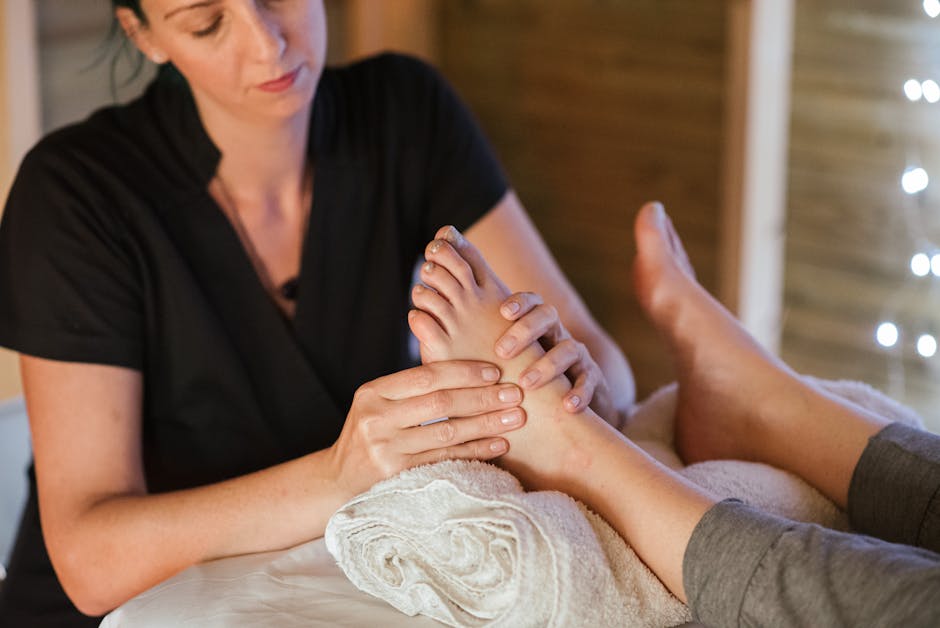
The Hanoi Foot & Body is the most-listed foreigner-friendly private massage studio in the Apgujeong corridor and the obvious first entry on the private-bodywork side of this shortlist. The institutional reading: Vietnamese-style foot and body massage, therapists cited in foreigner-recovery editorial as 15-plus-year veterans of the format, a 10-minute walk from Apgujeong Rodeo Station, and an 11:00-23:00 daily operating window that accommodates evening recovery stops after a Gangnam shopping day.
A short explanatory note on the format. Vietnamese-style massage as practised in the Apgujeong studios sits midway between Thai massage (which is structurally stretch-led and works through clothing) and Korean-traditional anma (which is pressure-led and works under loose covering). The Vietnamese format combines reflexology-focused foot work with full-body bodywork, uses oil rather than dry pressure, and runs at a moderate-to-firm intensity that suits both post-shopping recovery and post-aesthetic-treatment recovery. The 60-90 minute foot-and-body programs are the most-booked at Hanoi; the 90-120 minute extended programs add scalp and face work to the standard sequence.
The price band of KRW 60,000-150,000 per session sits in the mid-range of Apgujeong bodywork — below the celebrity-tier hotel spas, above the entry-price chain studios — and the language friction is consistently described as low because the studio's foreigner-client population is well-established. The booking flow accepts English-language messages via NaverPlace and the studio website, and the on-site service interaction is supported by an English menu of treatment programs. A first-time visitor without Korean will find the operational floor easily navigable.
The Vietnamese-style format differs from Korean-traditional massage (anma) in three practical ways. The first is pressure intensity: Korean anma at a traditional bathhouse runs at a substantially higher intensity than the Vietnamese-style work at Hanoi, and visitors who have heard the Korean massage style described as forceful should not project that intensity onto the Apgujeong studio format. The second is oil use: Korean-traditional bathhouse anma is typically dry-pressure on loose covering; the Apgujeong studios use oil under standard private-room conditions, which a Taipei or Hong Kong reader will recognise as the regional norm. The third is the reflexology focus: Hanoi runs reflexology-led foot programs as a core specialty, which differs from the general-bodywork-only format at some of the surrounding Apgujeong studios.
The 23:00 closing window makes Hanoi useful as a late-evening recovery stop after dinner rather than a daytime spa booking, which is how the editorial coverage tends to position it. Booking ahead is recommended for the evening windows (19:00-22:00 is the peak booking band) but not strictly necessary for off-peak hours (early afternoon and late morning), and a visitor with a flexible schedule can often secure a same-day slot for a midweek afternoon session. For visitors building a full Gangnam recovery day around a morning jjimjilbang session at Spa Lei or Spa 5, slotting a Hanoi booking for the late-afternoon or early-evening window is the editorial sequence and follows the convention Korean residents on a similar recovery day would use.
*Address*: Apgujeong area, Gangnam-gu, Seoul *Hours*: Daily 11:00-23:00 *Price*: KRW 60,000-150,000 per session *Booking*: Recommended via NaverPlace *Notable signature*: Vietnamese-style foot and body massage, 15+ year veteran therapists, oil-based bodywork *Transit*: 10-minute walk from Apgujeong Rodeo Station (Bundang Line) *Language*: English-friendly; foreigner-client base well-established

Dia Aesthetics is the post-aesthetic-treatment recovery massage entry on this shortlist, and the editorial reading is specific: it is repeatedly cited as the go-to lymphatic-drainage studio in Apgujeong for visitors recovering from facial treatments, and it sits inside the upscale Apgujeong strip rather than the foot-massage corridor.
The lymphatic-drainage specialty matters as a separate category because the technique addresses post-procedure swelling and circulation — the same post-treatment day a visitor might book after radiofrequency tightening, after a thread-lift session, or after high-energy ultrasound-based facial treatments — and a general foot massage does not substitute. The technique uses a specific manual pressure-and-stroke sequence calibrated to the lymphatic-vessel anatomy of the face and neck, and the practitioner training in this format runs longer and more specialised than the training for general foot-and-body bodywork. That is the operational reason post-treatment recovery editorial coverage repeatedly points back to studios with explicit lymphatic-drainage specialty rather than to general-bodywork rooms.
For a visitor on a Seoul beauty-trip itinerary, the question of when to book a lymphatic-drainage session has a clear answer: 24-72 hours after the underlying aesthetic procedure. Earlier than 24 hours risks aggravating the immediate post-treatment inflammation that the procedure expects to resolve naturally. Later than 72 hours and the peak swelling window has typically passed, making the session less differentiated from a general recovery massage. A visitor whose Seoul trip includes a multi-day stay can typically slot one Dia booking 48 hours after the underlying procedure and a second session before flying home for the additional circulation benefit during the flight; visitors on shorter trips usually book once.
The Mon-Sat 10:00-22:00 operating window and the KRW 80,000-250,000 per-session price band place it at the higher end of Apgujeong bodywork, consistent with the specialty positioning. The price tiers track session length and specialty focus — entry tier covers a 60-minute facial lymphatic-drainage session, mid-tier adds neck and decolletage work at 90 minutes, upper-tier extends to full upper-body lymphatic work at 120 minutes. The room format is private-treatment, the lighting is calibrated to the post-procedure recovery aesthetic (low-warm rather than bright-clinical), and the practitioner spends meaningful time on consultation before the session begins — a notable contrast to walk-in foot-massage studios where the format runs without intake.
Booking ahead is the operational norm rather than the exception, and the English-friendly service model makes the language friction manageable for non-Korean speakers. The reservation flow runs through NaverPlace and direct phone-message booking, and English-language intake forms are available on request. The reason the entry sits as Featured D on a five-room recovery shortlist rather than being passed over: a visitor staying in Apgujeong on a beauty-trip itinerary will sooner or later face the post-procedure swelling question, and the institutional answer for that question is Dia. A visitor who skips this entry will read the recovery vocabulary in Gangnam as foot-massage-only, missing the specialty post-treatment category that the surrounding aesthetic-medicine ecosystem produces.
*Address*: Apgujeong area, Gangnam-gu, Seoul *Hours*: Mon-Sat 10:00-22:00 *Price*: KRW 80,000-250,000 per session (60-120 min program tiers) *Booking*: Reservation recommended in advance via NaverPlace *Notable signature*: Lymphatic-drainage facial specialty, post-procedure recovery focus, private-treatment room format *Transit*: Apgujeong area; taxi recommended from Apgujeong Station *Language*: English-friendly; intake forms available in English on request
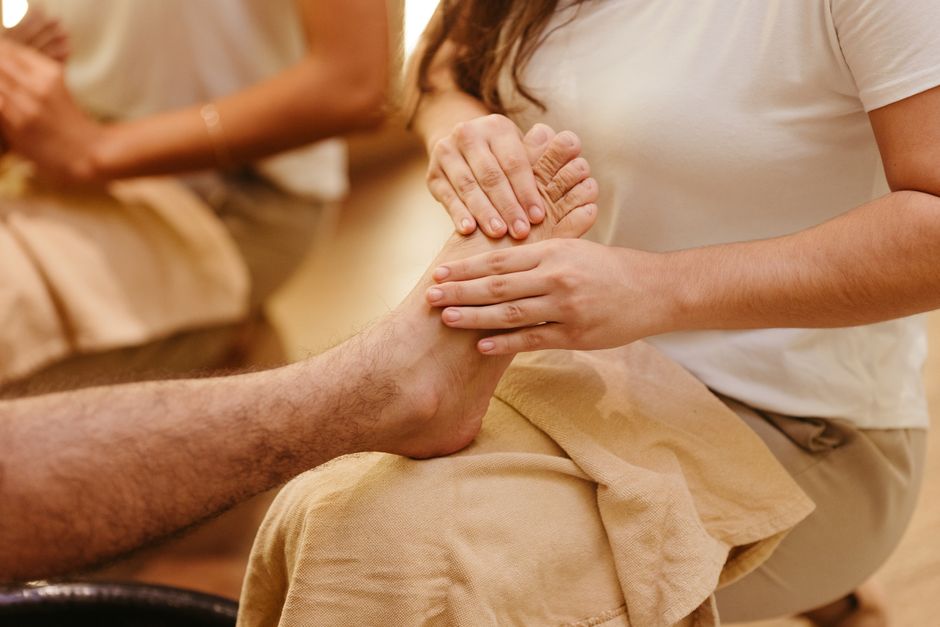
Jeongyeon's Gangnam foot massage studio closes the shortlist as the reflexology-specialty entry — distinct from the Vietnamese-style format at Hanoi and the lymphatic-drainage specialty at Dia, and consistently cited in foreigner-friendly recovery guides for the 28-year reflexology heritage and a clean professional setting that is closer to a clinic format than a typical foot-massage shop.
The reflexology-specialty positioning deserves a closer reading. Reflexology operates on the premise that specific points on the foot correspond to broader organ-system functions, and the technique uses focused thumb-and-knuckle pressure on those points across a session that typically lasts 60-90 minutes. A reflexology-led foot massage feels meaningfully different from a Vietnamese-style oil massage of the foot: the pressure is more focused, the practitioner spends longer on individual points, and the post-session reading is generally one of localised release rather than the broader oil-bodywork relaxation. A visitor who has used foot massage corridors elsewhere in Asia will recognise the reflexology format from Taipei dihua-jie studios or from Hong Kong reflexology rooms.
The institutional reading: the foot-focused programs run 60-90 minutes, the price band of KRW 50,000-120,000 per session sits below Hanoi and substantially below Dia, and the most-cited use case in editorial coverage is the recovery stop between Gangnam shopping and dinner — which is a different daypart from the after-dinner Hanoi booking or the post-treatment Dia booking. A visitor planning a full Gangnam recovery day might use Jeongyeon as the mid-afternoon stop between morning shopping at Garosu-gil or the Apgujeong corridor and the evening dinner-and-drinks rotation; the 60-minute foot program closes the shopping fatigue without imposing the longer commitment of a 90-120 minute body session at Hanoi or a specialty appointment at Dia.
The 28-year operating history is the institutional read that a Korean resident would cite, and the editorial coverage echoes it. In a district where boutique studios open and close on shorter cycles than the institutional grill houses do, a 28-year operating window is genuine signal — the surrounding studios with shorter operating histories have come and gone, but Jeongyeon has remained. The clean professional setting (closer to a clinic format than a typical foot-massage shop) is part of the same reading: the room is brighter, the chairs are more deliberately spaced, and the practitioner-to-client ratio is calibrated for the consultation-led format rather than the high-volume rapid-turnover model.
The English-friendly menu and the NaverPlace booking flow make the language friction manageable. The booking format accepts walk-ins for off-peak windows but reservations are operationally preferable for the after-work peak (17:00-20:00), which is when Korean residents using the studio for the post-work recovery slot fill the chairs.
The geographic placement near Gangnam Station rather than Apgujeong widens the recovery vocabulary across the district — a visitor staying in the Gangnam Station hotel cluster does not need to travel north to Apgujeong for foot-focused work, and a visitor staying in Apgujeong who has already used Hanoi or Dia can include Jeongyeon as the geographically distinct third recovery stop. The neighbourhood placement is the practical reason the entry closes the shortlist: the geographic spread across Sinsa-Gangnam-Apgujeong is what makes the five-room recovery list a route rather than a cluster.
*Address*: Gangnam-gu, Seoul (Gangnam Station) *Hours*: Daily 11:00-22:00 *Price*: KRW 50,000-120,000 per session *Booking*: Recommended via website / NaverPlace *Notable signature*: 28-year reflexology heritage, focused-pressure foot programs, clinic-format room *Transit*: Gangnam Station (Line 2) area *Language*: English-friendly menu and service
Frequently asked questions
What is a jjimjilbang and how is it different from a typical spa?
A jjimjilbang is the Korean 24-hour public bathhouse — graduated-temperature hot pools, dry sauna rooms in different mineral compositions, a sleeping floor for overnight stays, and shared food counters. The format is communal and ritual-driven rather than the private-room spa format, and admission prices (KRW 15,000-25,000) reflect the public-facility model rather than the boutique-spa pricing.
Which jjimjilbang in Gangnam is best for first-time foreign visitors?
Spa Lei is the editorial default for first-time foreign women visitors — women-only operation, VisitKorea listing, English-friendly menu, KRW 16,000 admission, and 24-hour operating window. Spa 5 / Lotte Boseuk Sauna is the mixed-gender alternative in the Gangnam Station core, with slightly higher English-language friction but a more authentically domestic Korean format.
What is the Korean body scrub (sesin) and should I try it?
Sesin is the Korean exfoliation treatment that uses a textured glove (iteri) after a thirty-minute soak to remove the softened outer skin layer. It is the most-cited foreigner-curiosity item on any Seoul travel list and is available as an add-on service at most jjimjilbang for around KRW 25,000-40,000. The experience is more vigorous than typical Western exfoliation and is best read as a cultural ritual rather than a luxury treatment.
Which Apgujeong massage studio is best after an aesthetic medicine procedure?
Dia Aesthetics is the editorial default for lymphatic-drainage post-procedure recovery — addressing the post-treatment swelling and circulation question specifically rather than offering a generic foot or body massage. The Apgujeong location places it inside the standard beauty-trip itinerary, and booking ahead is the operational norm rather than the exception.
How much should I budget for a Gangnam massage session?
Foot massage and reflexology runs KRW 50,000-120,000 per session (Jeongyeon). Vietnamese-style foot and body bodywork runs KRW 60,000-150,000 (Hanoi). Lymphatic-drainage and specialty post-treatment recovery sits at KRW 80,000-250,000 (Dia). Jjimjilbang admission is separate from these figures and substantially lower at KRW 15,000-25,000.
Do I need to book massages in advance?
For Dia Aesthetics, yes — booking ahead is the operational norm. For Hanoi Foot & Body, booking is recommended for evening windows. Jeongyeon Foot Massage takes both walk-ins and reservations via NaverPlace. The two jjimjilbang (Spa Lei, Spa 5) are walk-in 24-hour facilities and do not take reservations in the conventional sense.
Is there a women-only option in the Gangnam area?
Spa Lei is the women-only 24-hour spa option in the Sinsa-Gangnam corridor, 200 metres from Sinsa Station, with KRW 16,000 admission and a 100-spot parking lot. The women-only operating model removes the male-section sequencing question that complicates booking at the larger mixed-gender bathhouses and is consistently cited in foreigner-friendly editorial as the safe-default choice.
Can I combine jjimjilbang and massage into one Gangnam recovery day?
Yes — and the editorial reading suggests the order matters. A morning jjimjilbang session (Spa Lei or Spa 5) opens the circulation and softens the surface tissue, after which a midday foot massage (Jeongyeon) or an afternoon Vietnamese-style session (Hanoi) lands more effectively. Lymphatic-drainage work at Dia is best scheduled as a separate appointment specifically for post-aesthetic-treatment recovery rather than as part of a general wellness day.