
Editorial Picks
Three Korean BBQ restaurants that define Gangnam's beef scene
A curated reading rather than an exhaustive ranking — one Apgujeong institution, one Cheongdam supply-network house, and one Gangnam Station pork-belly default that a Taipei reader can slot into a Seoul beauty trip without language friction.
Korean BBQ in Gangnam is a two-vocabulary conversation, and the most common reading error among first-time visitors is to flatten it into one. The first vocabulary is hanwoo — the Korean-bred beef sourced from a controlled domestic supply network, served as galbi (marinated short rib) or as the unmarinated premium cuts (ribeye, sirloin, brisket) that the institutional houses grade and price on a separate axis altogether. The second vocabulary is the casual pork-belly grill — samgyeopsal and the soju-friendly variants — which sits at a substantially lower price point and a substantially different cultural register, and which Korean residents use as the weeknight default rather than the milestone-meal option. A visitor who books a hanwoo house expecting a casual pork-belly evening will misread the room; a visitor who books a pork-belly chain expecting hanwoo will leave with a less interesting evening than the trip deserves. This shortlist is curated rather than exhaustive — three picks rather than the longer ten-or-fifteen format that the Seoul food-editorial ecosystem tends towards — because the Gangnam Korean BBQ vocabulary genuinely sorts into three institutional categories, and a longer list would dilute the reading rather than enrich it. The first entry is the Apgujeong hanwoo institution that has operated since 1976 and sits on the MICHELIN Guide; the second is the Cheongdam vertical-supply house that runs its own beef-trading network and favours private-room dining; the third is the casual pork-belly counterpart anchored around Gangnam Station that a Taipei reader will recognise as the entry-price option. None of these entries are sponsored. All three appear in either the VisitKorea editorial database, the MICHELIN Guide Seoul, the Seoul Tourism Organisation listings, or recurring coverage in established foreigner-friendly Seoul publications. The geographic ordering — Apgujeong, Cheongdam, Gangnam Station — is the route a visitor would walk it across an evening, not a ranking. Read it that way.

Samwon Garden is the institutional choice for premium hanwoo galbi in Apgujeong, and the editorial reading is consistent across the established Korea food-coverage ecosystem: a MICHELIN Guide Seoul listing, an operating window stretching back to 1976, and a garden-style compound a 7-minute walk from Apgujeong Station that has been favoured by both Korean families for milestone meals and by visiting dignitaries for nearly five decades. A Taipei reader looking for the hanwoo galbi vocabulary at its institutional ceiling reads Samwon Garden as the obvious first entry on this shortlist, and the institutional weight is not a marketing claim — it is the longest continuous operating record on this list, which is the kind of signal Seoul food editorial does not assign casually.
A short explanatory note on the format. Galbi in the Samwon vocabulary is the marinated short-rib preparation — the cut bone-in, scored, and rested in a soy-pear-sesame marinade before grilling — and it sits in deliberate contrast to the unmarinated premium hanwoo cuts (ribeye, sirloin, brisket) that the same kitchen also serves. The galbi tradition reads as the more accessible entry for a first-time visitor because the marinade carries the seasoning architecture; the unmarinated cuts read as the more advanced ordering choice because the beef itself must carry the room. A coherent first-visit ordering sequence at Samwon runs from a marinated galbi course as the opening, through one or two unmarinated premium cuts as the middle, and closes with the cold-noodle naengmyeon as the standard hanwoo-house finisher. The naengmyeon course is a small but telling detail of the institutional reading — Samwon's kitchen runs its own cold-noodle program rather than outsourcing the dish to a noodle subcontractor, which is the kind of vertical control that the older hanwoo houses tend to maintain and the newer-format competitors tend to drop.
The price band of KRW 40,000 to 80,000 per person sits at the upper-mid tier of Seoul hanwoo houses — substantially above the Gangnam Station pork-belly default and below the absolute ceiling of the dedicated hanwoo-only fine-dining rooms — and the price reflects the supply-side reading more than the room itself. Hanwoo as a category is graded on a 1 to 1++ axis that controls the price band tightly, and a Samwon Garden bill is built on the grade selection rather than on the menu structure. The garden-style compound interior reads as a deliberate design choice from a 1976 opening that has been carried forward rather than renovated away, and the wooden-pillar interior, the koi pond, and the multi-room layout are part of the institutional reading rather than incidental detail. A visitor walking in from the surrounding Apgujeong street grid finds the room reads as a step out of the contemporary district aesthetic and into the late-1970s Korean fine-dining vocabulary, and the design continuity is the operational reason the editorial coverage repeatedly cites Samwon as the institutional anchor for the genre.
The language friction is genuinely low. English menus are available across the dining rooms, the service staff includes English-speaking allocation that can be confirmed at the reservation stage, and the room layout uses individual table grills rather than a communal-station format that would impose Korean-default ordering conventions on a non-Korean speaker. A Taipei reader who has used the Tainan beef-soup vocabulary or the Taipei hot-pot premium-beef houses will find the Samwon ordering structure familiar in format though distinct in cooking method — the protein focus is the same, the grilled-versus-poached distinction is the differentiator. The banchan (side-dish) array at Samwon runs longer than the casual-format competitors — eight to ten plates accompanying the grilled course on a typical table — and the breadth is a deliberate part of the institutional reading rather than incidental generosity. A first-time visitor should plan the ordering to leave space for the banchan rotation alongside the protein.
Reservations are recommended rather than strictly mandatory, but the operational reading is that a Friday or Saturday evening without an advance booking will mean a queue, and a Sunday lunch slot is the easier window for a first-time visit on a tight schedule. The phone booking line (+82-2-548-3030) accepts English-language reservations directly, and the NaverPlace listing supports online booking through the standard Korean platform. For visitors on a structured Seoul itinerary, an opening-evening Samwon dinner sets the upper baseline for the rest of the trip's food vocabulary, and the contrast against the casual pork-belly default later in the week reads more clearly with that anchor in place. The post-dinner walking radius reads well in either direction — north towards the Apgujeong Rodeo strip for cocktails, south towards the Sinsa cafe corridor for dessert — and the Apgujeong Station Line 3 access makes the return-to-hotel logistics straightforward for visitors staying anywhere along the southern Seoul transit corridor.
*Address*: 835 Eonju-ro, Gangnam-gu, Seoul (7-minute walk from Apgujeong Station, Line 3) *Hours*: Mon-Sat 11:30-22:00, Sun 11:30-21:30 *Price*: KRW 40,000-80,000 per person (hanwoo galbi) *Phone*: +82-2-548-3030 *Booking*: Recommended; phone or NaverPlace *Notable signature*: Hanwoo galbi institution since 1976, MICHELIN Guide Seoul listed, garden-style compound *Language*: English menus and English-speaking service *Editorial source*: VisitKorea, MICHELIN Guide Seoul
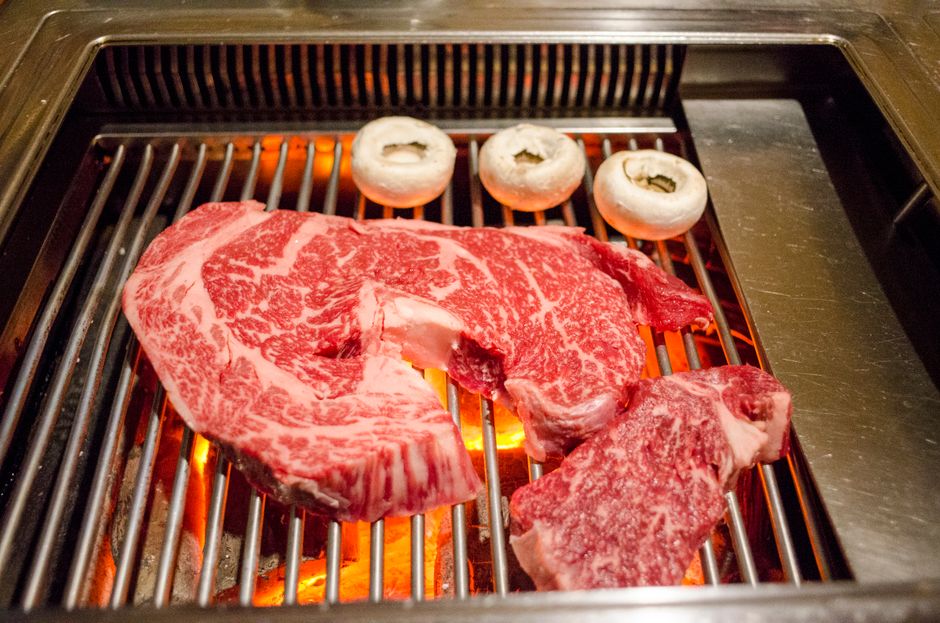
Byeokje Galbi is one of the longest-running hanwoo-galbi houses in Seoul, and the Cheongdam branch sits as the second entry on this shortlist for a specific reason — the chain operates a vertical-supply model that distinguishes it sharply from the broader hanwoo restaurant population. The institutional reading: regular feature placement in MICHELIN Guide Korea coverage, a Cheongdam-area address inside the highest-density premium-dining strip in Gangnam, and an ownership structure that runs the beef-trading network upstream of the kitchen rather than purchasing through the standard wholesale channels.
The vertical-supply model matters as a category distinction because most Seoul hanwoo houses source beef through the standard Majang-dong wholesale channel, which means the supply quality varies day-to-day with the broader market grade allocation. Byeokje's parent company operates as a beef trader in its own right, which means the Cheongdam kitchen receives priority allocation from the upstream grade pool and has direct visibility into the breed-and-feed history of individual carcasses in a way that the standard wholesale-buying competitor does not. The practical reading on the plate is consistency — the Byeokje galbi grade-to-grade variation runs tighter than the standard Seoul-hanwoo distribution, and the institutional editorial coverage repeatedly cites this as the differentiating factor rather than a particular signature dish. A visitor on a multi-Seoul-trip itinerary who has eaten hanwoo at multiple addresses across multiple trips will read the Byeokje consistency as the more disciplined kitchen output; a first-time hanwoo visitor will read the same plate as the institutional benchmark and may not yet have the comparative vocabulary to register why.
The seating layout favours family-room private dining over the open-grill street-style format that the Apgujeong rodeo-strip houses tend towards. A Cheongdam reading puts this in context: the neighbourhood operates as the discreet-luxury counterpart to the more performative Apgujeong rodeo strip, and the Byeokje seating model reflects that — private rooms with sliding doors, individual table grills, and a service rhythm calibrated to longer multi-course evenings rather than the rapid grill-and-go format of the lower-priced houses. For a visitor entertaining a multi-course evening with conversation as the primary focus, the private-room format reads as the appropriate booking; for a visitor wanting the public-grill-floor experience, this is the wrong entry on the shortlist. The room scale matters too — Byeokje runs its rooms at lower decibel levels than the Samwon main dining hall, and a quieter evening reads more naturally here than in the more institutional-format competitors.
The price band of KRW 60,000 to 120,000 per person sits a meaningful step above Samwon Garden, and the gap reflects both the supply-side priority access and the longer-format service rhythm. The ordering structure runs in the same hanwoo vocabulary — marinated galbi, unmarinated premium cuts, the cold-noodle finisher — but with a wider grade window at the upper end. Visitors who want to test the upper grade ceiling on a Seoul trip read Byeokje as the more deliberate booking choice; visitors on a tighter budget allocation read Samwon as the more accessible institutional entry. The wine and soju program is meaningfully better developed at Byeokje than at the casual-format competitors, with a wine-by-the-bottle list that runs through the Korean-imported Bordeaux and Burgundy programs, and the soju selection includes the premium-grade traditional-distillery options that the broader Seoul restaurant population stocks less consistently.
Reservations are recommended and the phone booking line (+82-2-548-0085) accepts English-language requests. An English menu is available on the table, though the room ambience is more Korean-default than English-friendly in conversational register — the language friction is manageable but slightly higher than at Samwon, and the editorial coverage tends to position Byeokje as the destination for visitors who have already read one hanwoo room and want to read the supply-network category specifically. A Taipei reader staying in the Cheongdam-area hotels (Andaz, Park Hyatt Seoul) will find Byeokje a walking-distance booking; visitors staying in the broader Gangnam Station hotel cluster should plan for a taxi rather than a metro transfer. The Cheongdam district itself reads as a distinct neighbourhood from the rest of Gangnam — quieter at street level, more residential in the surrounding building grid, and with a slower pedestrian rhythm than the Apgujeong rodeo or Gangnam Station equivalents. The dining-room evening reads as a piece with that surrounding ambient quality.
The Cheongdam branch is the recommended of the multi-branch Byeokje footprint for foreign visitors specifically — the Yeoksam and Bongchun branches operate but the Cheongdam location runs the most consistent English-friendly booking flow, and the surrounding neighbourhood is the easier post-dinner walking environment than the busier Yeoksam corridor. For visitors building a Seoul food evening that pairs hanwoo with a quiet dessert or cocktail stop, the Cheongdam-area concentration of late-evening venues makes this the more cohesive geographic anchor. The post-dinner reading runs naturally into a cocktail stop at one of the surrounding Cheongdam basement bars or a dessert booking at the higher-end traditional-Korean cafe formats that the neighbourhood specialises in, and the walking radius is short enough to make the second-venue addition feel like an extension of the meal rather than a separate logistics decision.
*Address*: Cheongdam-dong area, Gangnam-gu, Seoul *Hours*: Daily 11:30-22:30 *Price*: KRW 60,000-120,000 per person *Phone*: +82-2-548-0085 *Booking*: Recommended in advance *Notable signature*: Hanwoo from in-house supply network, MICHELIN Guide Korea listed, private-room dining *Language*: English menu; English-friendly booking flow *Editorial source*: MICHELIN Guide Korea, Seoul Tourism Organisation
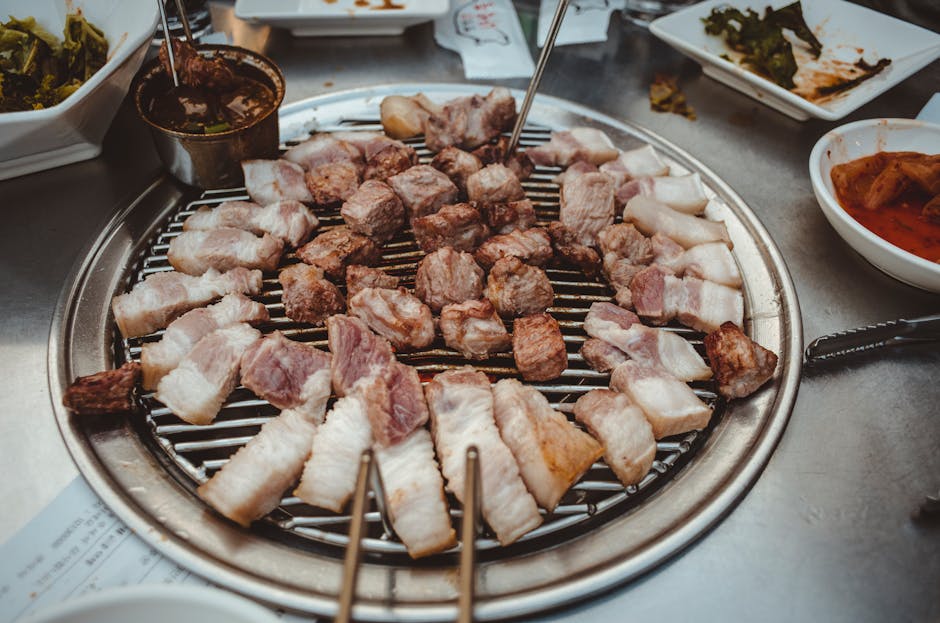
Saemaul Sikdang — translated on most foreigner-friendly listings as New Village — closes this shortlist as the casual pork-BBQ counterpart to the two hanwoo institutions, and the reading is deliberately distinct from the upstream entries. The chain was founded by celebrity restaurateur Baek Jong-won, the most recognisable name in the Korean food-television ecosystem, and the Gangnam Station-area branches anchor the night-eating belt around the Line 2 transit hub with a vintage Korean-village interior style. The institutional editorial coverage positions Saemaul Sikdang as the entry-price option on virtually every Seoul BBQ first-timer guide, which is the precise role this entry fills on the shortlist.
The genre distinction is what makes the inclusion important. Pork-belly grill (samgyeopsal) and the kimchi-stew or doenjang-stew sides that accompany it sit at a substantially different cultural register from the hanwoo houses upstream — the price point is roughly one-third of Samwon Garden, the room is intentionally loud rather than discreet, and the Korean-resident reading is weeknight casual rather than milestone meal. A shortlist that contained three hanwoo houses would misread the Gangnam BBQ vocabulary by ignoring the genre that Korean residents actually eat most often, and a shortlist that contained only hanwoo would steer a visitor away from the format that is most accessible to a casual evening drop-in. Saemaul resolves both gaps with a single institutional entry.
The signature on the Saemaul menu is the 7-minute samgyeopsal — a thin-sliced pork-belly preparation that the chain has trademarked as the grilling-time-as-product approach, with the table grill heated to a specific temperature window and the slice thickness calibrated to a 7-minute cook reading from raw to plate-ready. The kimchi-jjigae stew (Yeolt-kimchi, the aged variant) is the second signature and reads as the Korean-domestic counterpart to the pork-belly star — visitors who order both get the full chain vocabulary in one sitting. The price band of KRW 12,000 to 25,000 per person makes this a substantially more flexible booking than the hanwoo houses, and a visitor on a longer Seoul trip can comfortably revisit two or three times across the stay without the upstream-grade fatigue that the more expensive rooms eventually produce.
The Gangnam Station branches operate on a walk-in model rather than a reservation flow, which reflects the chain format — high-volume turnover with a typical table cycle of 60 to 90 minutes, and a queue convention that visitors should plan around. The peak windows run roughly 19:00 through 22:00 across weeknights and stretch later on Fridays and Saturdays, and a 17:30-18:30 early-dinner window or a 22:00+ late-evening window will produce the easier walk-in seating. For visitors integrating Saemaul into a longer Gangnam Station walking route — a late-afternoon shopping rotation, a 17:30 dinner at Saemaul, then an evening dessert or pocha stop — the walk-in format aligns with the spontaneous-evening reading the surrounding district produces.
The language friction is the lowest on this shortlist. Picture menus are standard across the chain, the ordering convention runs on point-and-confirm rather than on conversational Korean, and the staff are accustomed to international visitors arriving solo or in small groups without prior Korean exposure. The chain-format efficiency means the service speed is high, the wait-staff turnover is consistent, and the operational floor is genuinely navigable for a first-time foreign visitor. A Taipei reader who has used the Singapore hawker-centre format or the Hong Kong dai-pai-dong format will recognise the operational rhythm immediately, though the menu structure is closer to a pre-set ordering page than to the chalkboard-board format the Hong Kong equivalents use.
The vintage Korean-village interior reads as deliberate design rather than incidental — wooden chairs, fluorescent overhead lighting, and Saemaul Undong-era graphic posters on the walls reference the 1970s rural-modernisation period that the chain name nods to. A Taipei reader from the 80s-nostalgia restaurant ecosystem will recognise the reference register, though the Korean-specific period anchor will read as foreign rather than nostalgic. The intentional vintage layer is part of the brand reading and is the operational reason Saemaul stays distinct from the cleaner-format casual-BBQ chain competitors.
For visitors integrating Saemaul into a structured Seoul-trip food itinerary, the recommended sequencing is to use Saemaul as the early-trip casual entry — a Day 1 or Day 2 evening that establishes the pork-belly vocabulary baseline — and then escalate to Samwon or Byeokje for a mid-trip milestone evening. The reverse sequencing (hanwoo first, pork-belly later) tends to make the Saemaul evening read as the price-drop step-down rather than as the discovery of a separate genre, and visitors usually report the food more positively when the genre framing is read in ascending rather than descending price order.
*Address*: Gangnam Station area, Gangnam-gu, Seoul (multiple branches) *Hours*: Daily 11:30-23:30 *Price*: KRW 12,000-25,000 per person *Phone*: Branch-dependent *Booking*: Walk-in *Notable signature*: Korean-style pork BBQ chain (Baek Jong-won), 7-minute samgyeopsal, Yeolt-kimchi jjigae, vintage Korean-village interior *Language*: Picture menu, English-friendly *Editorial source*: Visit Seoul, Cookly Seoul BBQ guides
Frequently asked questions
What is hanwoo and how is it different from regular Korean beef?
Hanwoo is the Korean-bred native cattle breed, graded on a quality axis from 1 to 1++ that is tightly controlled by the Korean government's beef-grading system. Hanwoo is sourced exclusively through the domestic supply network, and the institutional restaurants source either through the standard Majang-dong wholesale channel or through their own beef-trading subsidiaries. Price bands run from KRW 40,000 to 120,000 per person at the institutional houses.
Which Korean BBQ restaurant in Gangnam is best for a first-time foreign visitor?
Samwon Garden is the editorial default for first-time foreign visitors wanting the hanwoo galbi vocabulary at the institutional level — MICHELIN Guide listed, operating since 1976, English menu, and English-speaking service available. For visitors wanting the casual pork-belly entry-price option instead, Saemaul Sikdang in Gangnam Station is the chain-format default with picture menus and walk-in seating.
What is the difference between galbi and samgyeopsal?
Galbi is the marinated short-rib preparation served at the hanwoo houses — beef bone-in, scored, and rested in a soy-pear-sesame marinade before grilling. Samgyeopsal is the unmarinated pork-belly slice served at the casual pork-BBQ chains, grilled on a tabletop plate and wrapped in lettuce with garlic, ssamjang, and rice. The two sit at different price points (KRW 12,000-25,000 versus KRW 40,000-80,000) and different cultural registers.
How much should I budget for Korean BBQ in Gangnam?
Casual pork-BBQ chains (Saemaul Sikdang) run KRW 12,000-25,000 per person. Mid-tier hanwoo galbi institutions (Samwon Garden) run KRW 40,000-80,000 per person. Premium hanwoo houses with vertical-supply network access (Byeokje Galbi Cheongdam) run KRW 60,000-120,000 per person. Soju and beer add roughly KRW 5,000-8,000 per bottle and are commonly ordered alongside the grilled course.
Do I need to book Korean BBQ restaurants in Gangnam in advance?
For Samwon Garden, yes — phone (+82-2-548-3030) or NaverPlace booking is recommended, particularly for Friday and Saturday evening windows. For Byeokje Galbi Cheongdam, booking is recommended in advance via phone (+82-2-548-0085). For Saemaul Sikdang in the Gangnam Station belt, walk-in is the operational norm with peak windows running 19:00-22:00 and easier seating before 18:30 or after 22:00.
What hanwoo grade should I order for the first time?
Grade 1+ is the recommended ordering choice for a first-time hanwoo visit — the marbling pattern is generous enough to read as distinctly different from international beef while the price band sits at the more accessible end of the institutional range. Grade 1++ is the upper ceiling and reads as the more advanced ordering choice for visitors who have already eaten hanwoo once. Both grades appear on the Samwon Garden and Byeokje menus across multiple cut options.
Is Korean BBQ in Gangnam suitable for solo dining?
Samwon Garden and Byeokje Galbi are built around table-grill formats that work best for groups of two or more, and the institutional dining-room rhythm is calibrated to longer multi-course evenings rather than solo drop-ins. Saemaul Sikdang is the more solo-friendly option in the shortlist with chain-format efficiency and walk-in seating. For a fully solo hanwoo experience, single-seat hanwoo counters exist elsewhere in Gangnam but are not the institutional entries covered here.
Can I order Korean BBQ as a halal or vegetarian visitor?
Korean BBQ as a genre is built on the grilled-protein format — pork at Saemaul, beef at Samwon and Byeokje — and is not the appropriate booking for vegetarian visitors. Halal-certified Korean BBQ is rare in the Gangnam corridor; the institutional hanwoo houses do not hold halal certification, and visitors with halal requirements should consult the Korea Tourism Organization's dedicated halal-friendly restaurant database via VisitKorea before booking. Side dishes (banchan) are generally vegetarian but cross-grill contact is the default.